
The motorcycle racing community is mourning the death of master entertainer Anthony Gobert, who passed away on Wednesday, January 17 at the age of 48.
His passing was announced by his mother, Sue, on social media:
“My heart is breaking as I write this as my first-born beautiful son Anthony has passed late this afternoon. I loved him from the moment he was born until the day I die. At times he was challenging to say the least, but he always had a kind heart and cared for everyone. Sadly, he was a victim of addiction which runs deeply in our families. He tried many times to get better, but he couldn’t quite make it. I am so proud of him and thank all those good people who added to his life. You know who you are.”
Quite simply, the Sydneysider was a sublime motorcycle racing talent, and it was evident he was one out of the bag as a junior in the motocross and supercross ranks. He loved the thrill of the hunt and, as a teenager, he was defeating local legends like Glen Bell, Craig Dack, Peter Melton and Eddie Warren in the 1991 and 1992 national supercross titles with a level of flamboyance that was already exciting crowds across the country – on and off the racetrack. We’re not quite sure when ‘The Go Show’ moniker kicked in, but that would have been an apt time…
Even at that juncture, when the AMA Supercross Championship would have been the logical next step for such a prodigious supercross campaigner, he was eyeing off a career in road racing – at the very top, too, with three world 500 GP titles on his radar.

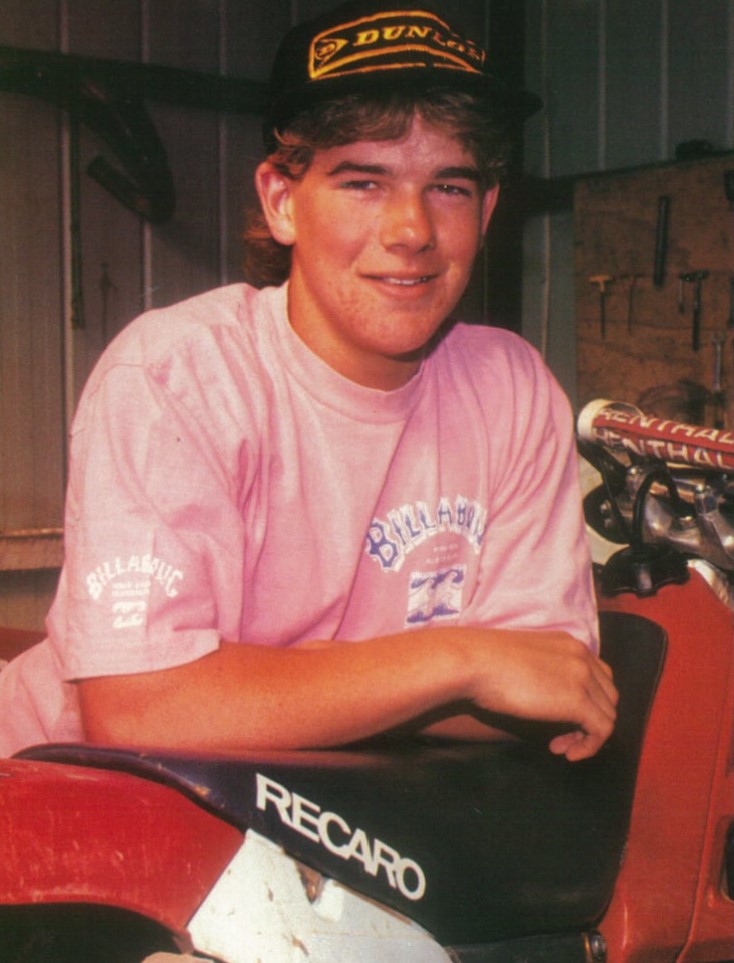
The switch to road racing was initially via the now defunct but highly entertaining 250cc Production two-stroke class – a breeding ground for Aussie stars such as Mick Doohan, Troy Corser and Garry McCoy – and by 17 he was a Superbike factory rider with Honda.
In 1994 he won the Australian Superbike title on a Honda RC45, and some of his battles with Mat Mladin (Kawasaki) during that season were instant classics – with two toe-to-toe humdingers at Lakeside especially coming to mind.
A late-season defection to Kawasaki saw him make his debut on the international stage at the Phillip Island World Superbike (WorldSBK) round – and typical of Goey, he didn’t ease himself into an unfamiliar environment but instead had the audacity to steal the headlines with pole position and a 3-1 scorecard.
That was the first of six WorldSBK wins for Kawasaki, with five following across the next two seasons – including another three at Phillip Island – as a factory WorldSBK rider during a period when competition was fierce in the production-based class.
He finished fourth in the 1995 WorldSBK title, and eighth in an injury-interrupted 1996.

WorldSBK aficionados will fondly remember the 1996 Philip Island celebrations, with Gobert removing his leathers alongside great mate (and new world champion) Corser and New Zealander Aaron Slight on the podium and throwing them into the adoring crowd.
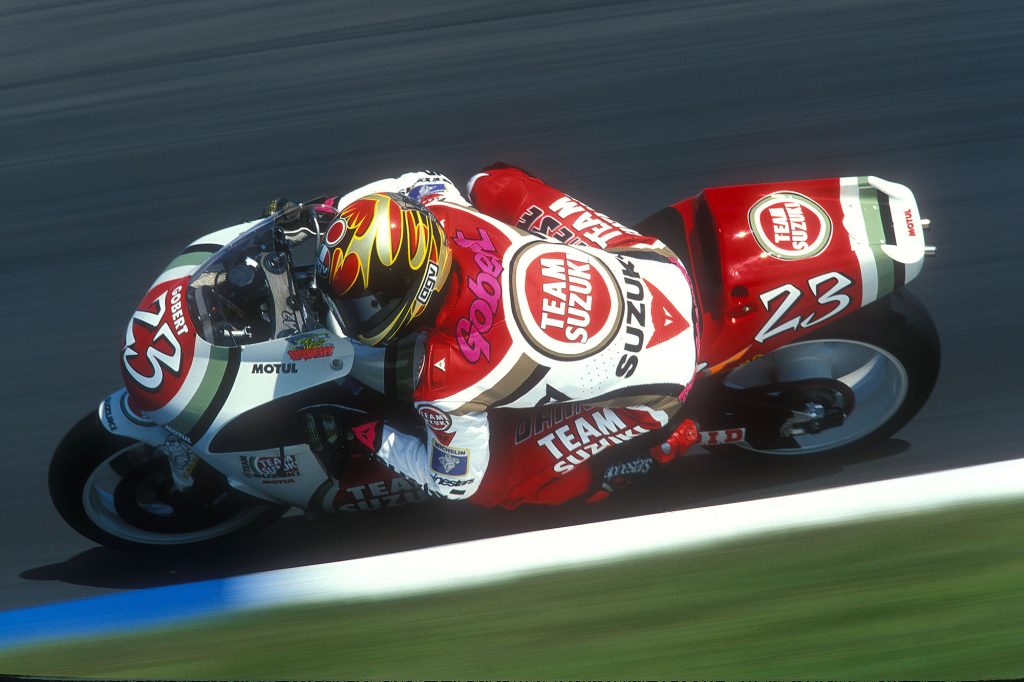
It would be Gobert’s final ‘rock star’ act in WorldSBK, as he had signed with the Lucky Strike 500 GP team for the 1997 season to ride alongside countryman Daryl Beattie.
After five top-10 finishes in the eight races he would start in 1997, Gobert was sacked by Suzuki for failing a drug test. With his card marked, it effectively ended his career in the premier class despite a couple of cameos for lowly ranked teams in 1999 and 2000.
In 1998 and 1999 he competed in the AMA Superbike Championship on a Ducati in an era when Mladin (Suzuki) was dominating the American scene.
During the 1999 season, as a wildcard, Gobert won his second last WorldSBK race at Laguna Seca, and in 2000 he joined Bimota to return full-time to WorldSBK – starting the season with a runaway win in mixed conditions at Phillip Island. Unfortunately, that was the only high mark in a partnership that didn’t see out the season.

Over the next seven seasons, Gobert competed in America, Australia and sporadic rounds of World Supersport and WorldSBK before he retired from competition.
According to many people who worked closely with Gobert, his natural talent was unmatched – former Suzuki crew chief Stuart Shenton rates him above riders like Freddie Spencer, Wayne Gardner and Kevin Schwantz – but applying that gift on a consistently high-level basis proved to be his Achilles heel.
Ultimately, alcohol and drug addiction became overpowering forces for Gobert, but his legacy is indelible: a rider whose highlights reel has to be seen to be believed.
Unique, unorthodox, an entertainer par excellence. RIP Anthony Gobert.
Motorcycling Australia sends its deepest sympathies to Gobert’s mum, Sue, his younger siblings Aaron and Alex, as well as his extended family and friends.